
“Let food be thy medicine and medicine be thy food.” — Hippocrates
As a busy student, this soup is my go-to, making a weekly appearance in my kitchen. It’s pure comfort, especially when paired with a slice of freshly toasted bread, generously dipped in the world’s finest extra virgin olive oil. It’s not just delicious—it’s a soul-warming hug in a bowl, perfect for those chilly months. The inspiration for this recipe comes from a zucchini soup I once had at my roommate’s house. Her mom? Absolute legend in the kitchen! The zucchinis were grown in her very own garden.
Ingredients
- 2 Zucchinis (keep the skin on for flair, but trim those edges)
- 500g Potatoes
- 600-700 ml of water
- Oil
- 1 Onion
- Salt to taste
- 5 cloves of garlic
- Parmigiano Reggiano rind (recommended for extra oomph)
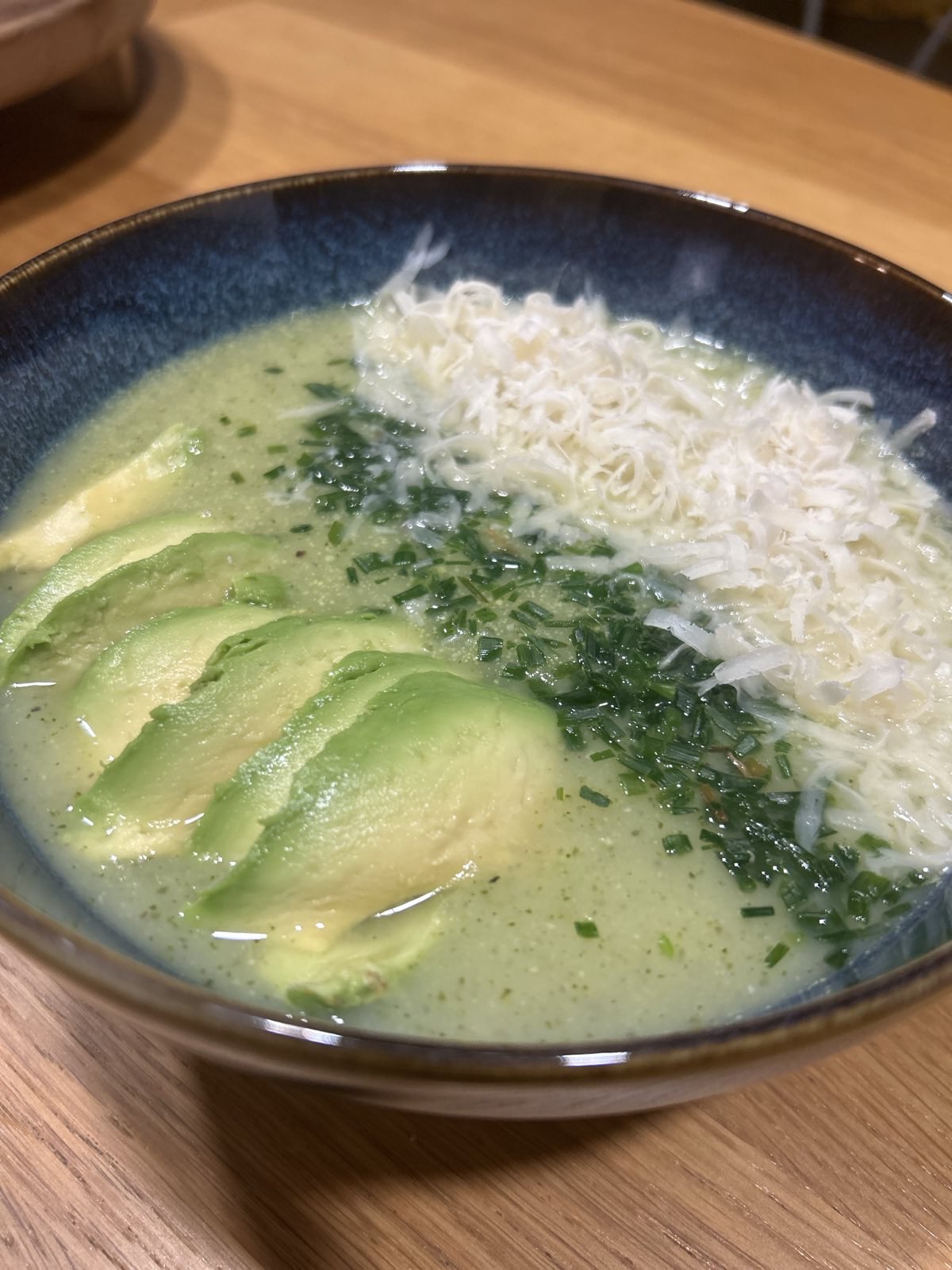
- Garnishes: freshly grated parmesan, chives, sliced avocado, and pine nuts (optional but you know you want them)
Directions
- Potato Prep Party. Start with your starchy potatoes—because they’re the star of this show. Rinse them like they’ve been rolling in the dirt (because they probably have, lol). Peel, halve, and toss them into a pot. Cover with about 600-700ml of cold water, ensuring they’re fully submerged.
- Turn Up the Heat! Once your potatoes are cozy in their water bath, crank up the heat. When the water hits a rolling boil, sprinkle in some salt like the fabulous chef you are. Set a timer for 20 minutes and let those spuds cook until they’re fork-tender.
- While your potatoes are doing their thing, grab your zucchini. Rinse it, trim the edges, and chop it into bite-sized pieces. Dice your onion and mince that garlic with flair.
- Heat 2 tablespoons of your favorite oil in a pan over medium heat. Toss in the diced onion and let it sweat out its worries. Add the minced garlic, salt, and pepper. Stir it up, and let the aroma make your kitchen smell like a five-star restaurant.
- Once your potatoes are tender, add the sautéed onion-garlic mix and the chopped zucchini to the pot. Feeling fancy? Drop in a parmesan rind—it’s like a flavor bomb waiting to explode. Let this simmer for 15 minutes, then fish out the rind before blending.
- Blend & Simmer ! Blend the soup until it’s smoother than your best pick-up line. If you like your soup on the thicker side, hold back on the water; if you prefer it thinner, add a splash more. Once blended, you can reintroduce the parmesan rind and let it simmer on low heat for another 10-15 minutes.
- Ladle your masterpiece into a bowl and top with freshly grated parmesan, creamy avocado slices, and crunchy pine nuts. These garnishes are optional, but trust me, they’ll take your soup from “meh” to “chef’s kiss”. I like to mix things up with my healthy fats, depending on my mood. Some days, it’s creamy avocado on top; other days, it’s crunchy pine nuts stealing the show. But one thing’s for sure—there’s always a generous drizzle of olive oil to tie it all together!
Storage Tips: Got leftovers? Lucky you! Store your soup in the fridge for up to 3 days or freeze it for up to 2 months. Just make sure it’s in an airtight container !
Fun Facts
Chameleons are native to the rainforests and deserts of Africa, where their skin color helps them blend seamlessly into their surroundings. Tree-dwelling chameleons tend to be green, while those in desert environments are more commonly brown.
Interestingly, chameleons don’t just change color for camouflage—they also do it to regulate their body temperature. Darker shades help them absorb more heat when they need to warm up, while lighter tones keep them cool. Additionally, they use vibrant colors to communicate, signaling potential mates or warning rivals.
But how do they pull off this color-changing magic? Their outer skin layer is transparent, and beneath it are layers of specialized cells packed with pigments, the substances that give color to plants, animals, and even humans. When the chameleon’s brain sends a signal, these cells expand or contract, causing the pigments to mix in various ways. For example, combining red and blue pigments can create a purple hue. This intricate process allows chameleons to display an impressive range of colors.- National Geographic Kids